Morocco’s desert landscapes offer some of the world’s most extraordinary photography opportunities — golden hour light of unrivalled quality, ancient earthen architecture glowing at sunset, camel silhouettes against infinite sand, and a night sky so unpolluted by artificial light that the Milky Way is captured in basic camera equipment. A well-planned Morocco desert photography tour can produce images that define a portfolio, and even a casual photographer with a smartphone returns from the Sahara with extraordinary material. This guide covers the best locations and practical techniques for making the most of the extraordinary visual material along the Ouarzazate-to-Merzouga route.
Best Photography Locations on the Desert Route
Erg Chebbi Dunes at Golden Hour
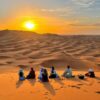
The Erg Chebbi dune field at Merzouga is the centrepiece of any Morocco desert photography experience. Sunrise and sunset provide approximately 45 minutes each of extraordinary golden hour light, where the dune crests create long graphic shadows that reveal the sand sea’s structure in a way midday light entirely flattens. The optimal shooting position for sunrise is on the dune crest east of the camp, facing west — the low sun illuminates the dune faces while shadows fill the valleys between. For sunset, the reverse position looking east captures the dunes in direct warm backlighting.
Todra Gorge: The Morning Light Shaft
The Todra Gorge narrowest section receives direct sunlight for only a few hours around midday when the sun is high enough to penetrate the ten-metre gap between the 300-metre walls. Arriving between 9:00 and 11:00 am captures the light shaft effect at its most dramatic — a concentrated beam of warm sunlight on the canyon floor surrounded by the shadowed walls. This effect reverses by 2:00 pm as the sun’s angle changes.
Ait Benhaddou in Afternoon Light
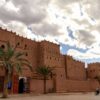
The clay walls of Ait Benhaddou glow deep amber in the two hours before sunset. The classic composition — from across the dry Ounila riverbed, with the entire ksar reflected in the seasonal water or framed against the desert plain — is best captured between 3:00 and 5:00 pm in summer, or 2:00 and 4:00 pm in winter.
Saharan Starscapes
The Merzouga region’s zero light pollution makes it an exceptional astrophotography location. A 24mm or wider lens at f/2.8, ISO 3200, and a 20-second exposure captures the Milky Way over dune silhouettes with standard mirrorless or DSLR equipment. Moonless nights in spring and autumn provide the best conditions.
All our tours from Ouarzazate and Fes can be timed for optimal photography conditions. Tell us your photography goals when booking and we will adjust arrival times at key locations accordingly. Visit Morocco Official Tourism and National Geographic — Sahara Desert Guide provide further Morocco photography destination research.