Morocco’s Sahara Desert is a year-round destination, but the quality of the experience varies significantly with the season. Choosing the right time to visit Merzouga and the Erg Chebbi dunes can be the difference between a perfect desert trip and an uncomfortable one — or, equally, between peak-season crowds and the extraordinary solitude of a winter Saharan morning. This month-by-month guide gives you the information to make the right decision for your circumstances.
Spring — March to May: The Prime Desert Season
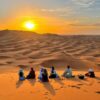
Spring is widely regarded as the best time for Morocco desert tours. Daytime temperatures at Merzouga average 22 to 32 degrees Celsius — comfortable for camel trekking and dune exploration without the oppressive heat of summer. Nights drop to 10 to 18 degrees, ideal for sleeping in traditional desert camps. The Erg Chebbi dunes are at their most photogenic in spring light, and the Atlas Mountain crossings between Ouarzazate and Fes are particularly beautiful after snowmelt, with wildflower meadows at middle altitudes. The Rose Valley near Kelaa M’Gouna reaches its annual floral peak in May, adding an extraordinary optional detour for tours routing through the Dades Valley.
Autumn — September to November: A Close Second
Autumn rivals spring as the optimal desert touring season. The summer heat dissipates rapidly after August — September temperatures in Merzouga average 30 degrees, October around 25 degrees. Desert nights become comfortably cool again from late September. The date harvest in the Tafilalet and Draa Valley oases (October to November) provides an extraordinary agricultural spectacle. Crowd levels at the principal desert sites are typically lower than spring, and accommodation prices often reflect this with greater flexibility.
Winter — December to February: Cold but Extraordinary
Winter desert tours are among the most underrated Morocco travel experiences. Daytime temperatures at Merzouga average 18 to 24 degrees — ideal for walking and kasbah exploration. Nights drop to 2 to 8 degrees, occasionally below freezing in January, requiring proper warm layers and a good sleeping bag. The compensation is considerable: winter Saharan skies are the clearest of the year, producing the most extraordinary stargazing conditions. Snow on the High Atlas passes creates remarkable visual contrast with the desert below. Crowd levels are at their annual minimum and accommodation prices are most competitive.
Summer — June to August: Challenging but Possible
Summer at Merzouga can be extreme — daytime temperatures regularly reach 45 degrees Celsius in July and August. All desert activities are moved to the very early morning (before 9am) and evening. Desert nights remain comfortable at 22 to 28 degrees. Prices are lowest and crowds smallest, and for travellers comfortable with heat and willing to adapt their schedule, summer offers an authentic quality. Our tours from Ouarzazate and Fes operate year-round with seasonal scheduling adjustments. UNESCO — Medina of Fes and UNESCO World Heritage — Ksar of Ait-Ben-Haddou provide additional Morocco climate planning resources.