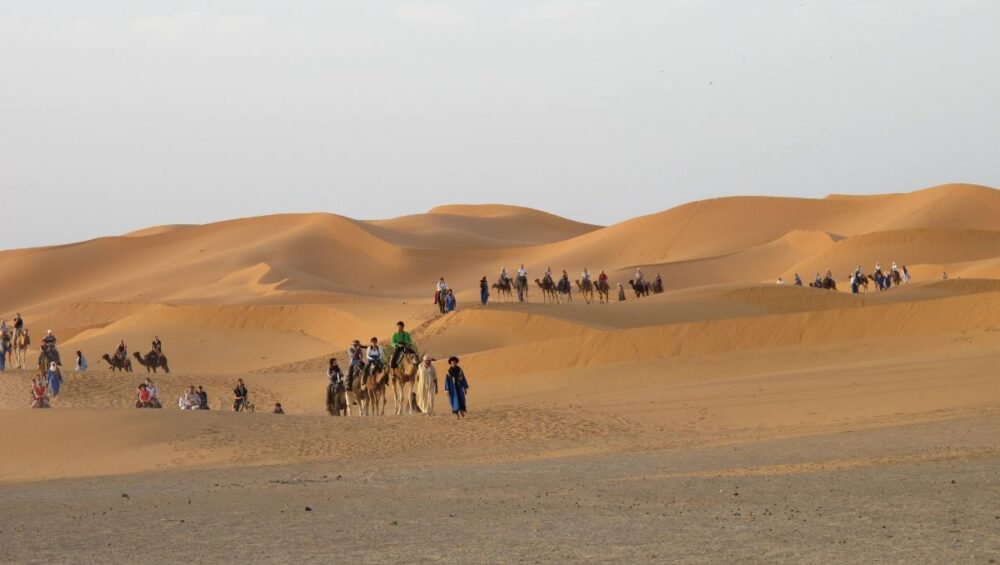
The most unexpectedly moving part of many Morocco desert tour experiences is not the visual spectacle of the dunes at sunset or the overwhelming clarity of the Saharan night sky — it is the music. As the campfire settles into coals and the stars accumulate overhead, a Berber guide lifts a guembri — a three-string bass lute made from camel skin stretched over cedar wood — and begins to play. The sound is ancient, repetitive, hypnotic, and deeply beautiful. This is Gnawa music, one of humanity’s oldest living musical traditions, and it belongs to the Saharan desert in the way that jazz belongs to New Orleans — inseparably and essentially.
The Origins of Gnawa Music
Gnawa music originated among sub-Saharan African people brought to Morocco as enslaved labour through the trans-Saharan trade routes from approximately the 10th century onward. These people — primarily from present-day Mali, Guinea, and Senegal — brought with them musical traditions rooted in West African spiritual practice, which they adapted and merged with North African Berber and Islamic elements over several centuries. The resulting music is a unique cultural synthesis: the deep drone of the guembri bass lute (unknown in North African music before their arrival), the hypnotic rhythms of the qaraqeb (large iron castanets), and call-and-response vocal patterns that derive from West African griot traditions.
The Guembri and Qaraqeb: Essential Instruments
The guembri is the defining instrument of Gnawa music — a bass lute with three strings (two melodic, one drone) stretched over a body made from a hollow cedar wood box covered with camel or goat skin. The instrument produces a warm, resonant bass tone that is simultaneously percussive and melodic. The qaraqeb are pairs of large iron castanets, approximately 20 centimetres long, that are struck together to provide sharp rhythmic accents against the guembri’s drone. In traditional Gnawa ceremonies, both instruments accompany extended chanted sequences believed to invoke specific spiritual presences associated with healing.
Gnawa Music on Desert Tours
Every overnight desert camp experience on our tours includes a Gnawa music performance. The guembri players who work with our camps are professional musicians from Gnawa families — people for whom this musical tradition is a living inheritance rather than a performance for tourists. The difference is perceptible. UNESCO inscribed Gnawa music on its Intangible Cultural Heritage list in 2019, recognising the tradition’s unique cultural significance. All our tours from Ouarzazate and Errachidia include this experience as standard. Visit Morocco Official Tourism and UNESCO World Heritage — Ksar of Ait-Ben-Haddou offer further Morocco cultural resources.