The global shift toward responsible travel has found particular resonance in Morocco’s Sahara Desert, where the fragile environmental and cultural conditions that make the destination extraordinary are also those most vulnerable to the negative impacts of poorly managed tourism. Sustainable desert tourism in Morocco is not an abstract aspiration — it is a set of specific operational practices that either protect or degrade the desert ecosystem and the Berber communities who depend on it. This guide explains what these practices look like in reality and how to choose tours that implement them genuinely.
What the Desert Ecosystem Requires
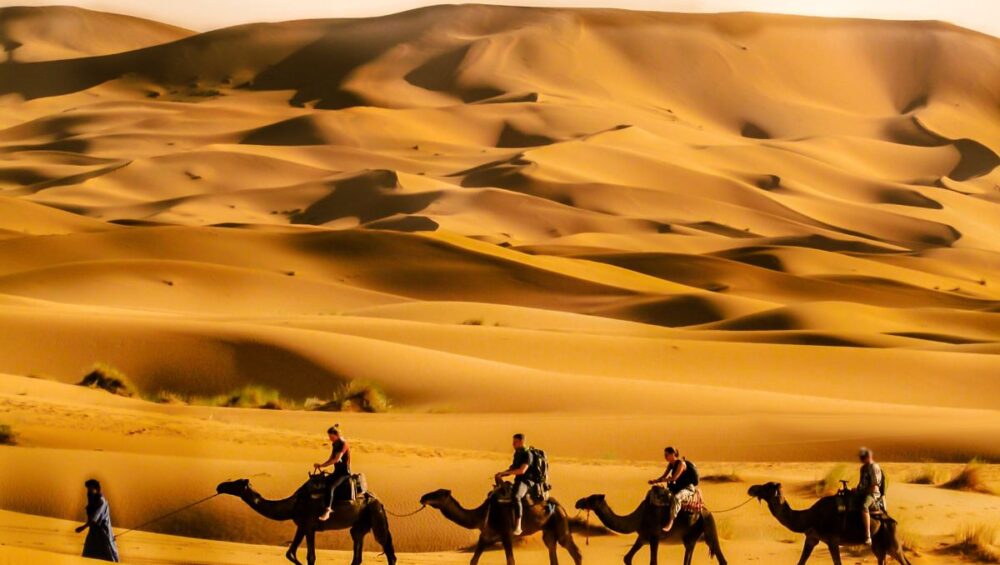
The Erg Chebbi dune field and its surrounding desert are extraordinarily sensitive to specific forms of human impact. The principal environmental threats are vehicle tracks crossing the dune field (tire grooves that remain visible for years in the consolidated sand between dunes), diesel generator noise and exhaust at overnight camps (which degrades the extraordinary silence and air quality that define the desert experience), single-use plastic waste left in the dune field (which can remain for decades in an environment with no natural decomposition pathways), and uncontrolled access to the dune crests by large tourist groups (which compacts the leading-edge sand and slows natural dune migration).
Sustainable Desert Camp Practices
Responsible desert camps have transitioned from diesel generators — which produce noise, exhaust, and fuel contamination risk — to solar power systems that provide electricity silently and cleanly. Single-use plastics have been replaced by filtered water in reusable bottles, biodegradable packaging, and bulk provision of toiletries. Waste management protocols ensure everything carried into the dune field is carried back out. Our partner camps at Erg Chebbi operate under these standards, verified by annual inspections.
Community-Based Tourism
The most meaningful form of sustainable desert tourism involves ensuring that the economic benefits of visitor spending reach the local Berber communities whose hospitality and cultural knowledge make the experience possible. This means employing local guides rather than outsourcing to city-based operators, using locally-owned accommodation rather than international chain hotels, and purchasing food from local farmers and producers rather than large commercial suppliers. Our tours from Ouarzazate, Fes, and Errachidia operate on this community-first model. See Lonely Planet Morocco Travel Guide and UNESCO — Medina of Fes for responsible Morocco travel resources.